Opera Aesthetic Living Room Formula 2026 | Moody Home Co
The exact staging system for an Opera Aesthetic living room — furniture ratios, lighting specs, drapery math, and 15 affiliate picks.
LIVING ROOM DESIGN
Moody Home Co
4/27/20267 min read
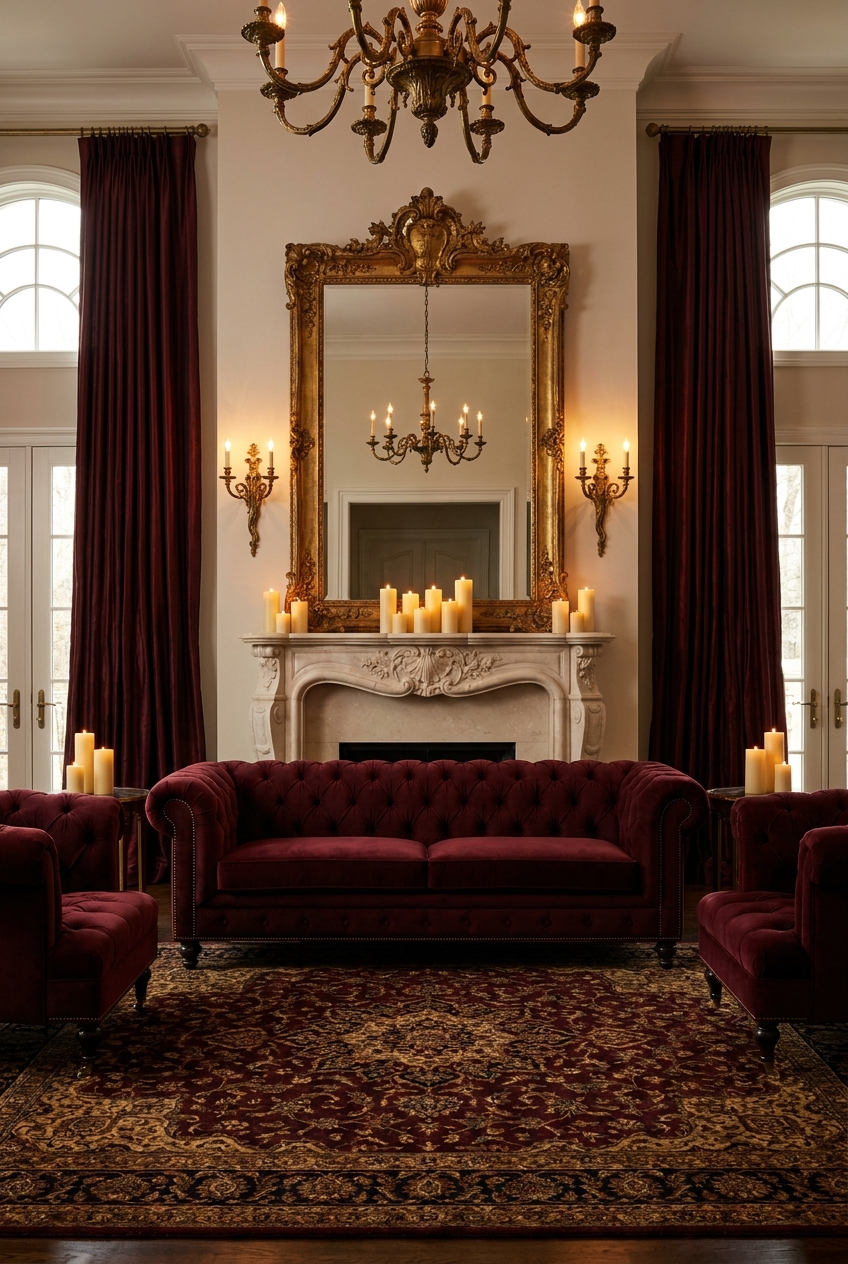
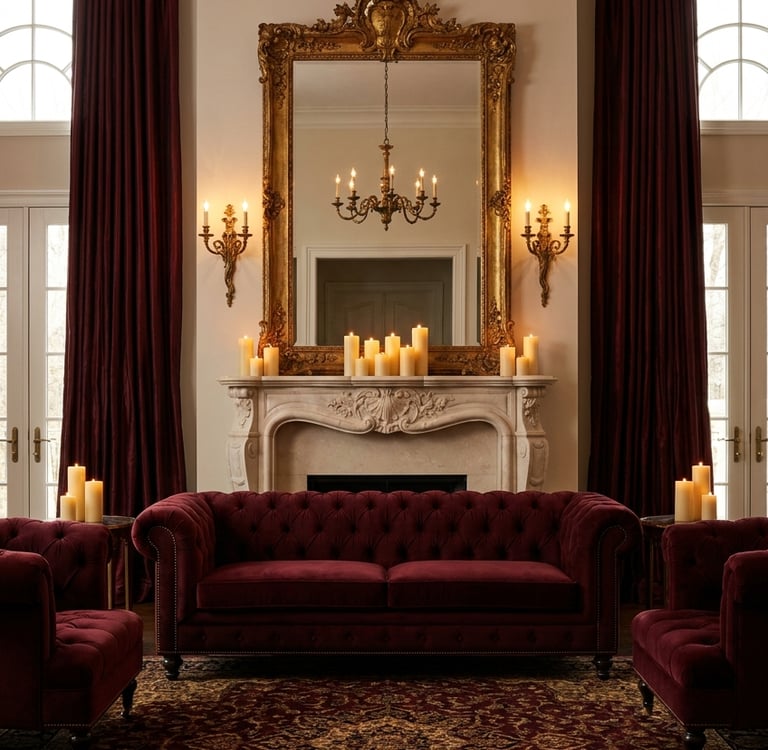
This post contains affiliate links. If you purchase through these links, I may earn a small commission at no extra cost to you.
Opera Aesthetic Living Room Formula 2026: The Exact Staging System for a Theatrical Dark Living Room
What Is the Opera Aesthetic?
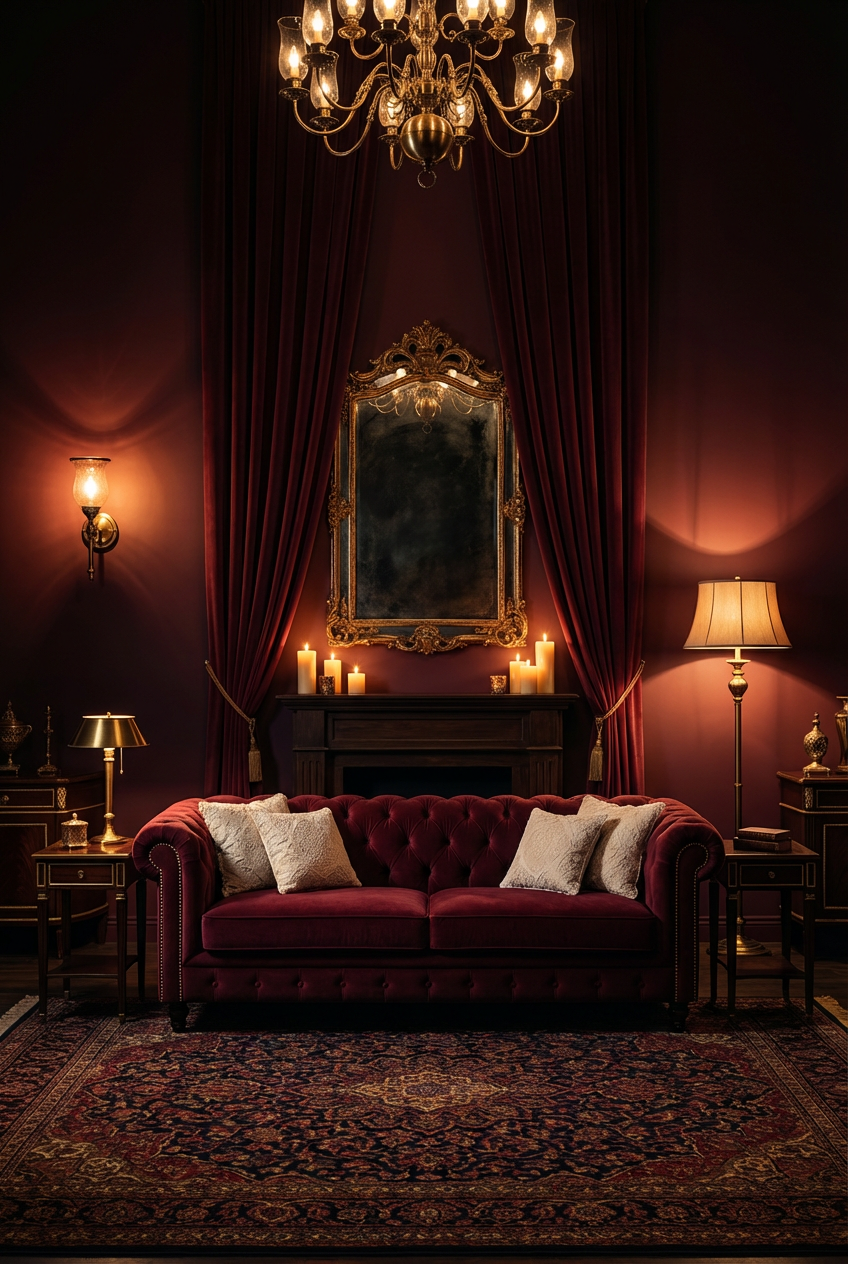
The Opera Aesthetic is 2026's most theatrical interior trend — a living room built on deep burgundy, antique gold, and crushed velvet that reads like a private opera box rather than a decorated room. It is the deliberate rejection of minimalism: more fabric, more warmth, more layered light. Pinterest named it a top predicted trend for 2026, and unlike most aesthetic cycles, this one has the structural depth to outlast the year it arrived.
These opera aesthetic living room ideas 2026 are not a mood board. They are a formula — a specific sequence of decisions that determines whether a dark room feels theatrical or just heavy.
The Staging Formula: How Opera Aesthetic Rooms Are Built, Not Decorated
Most attempts at this aesthetic fail at the same point: the pieces arrive without a system. A burgundy sofa alone reads purple. Velvet curtains without the right lighting read depressing. The Opera Aesthetic works because it is a sequence — and the sequence matters as much as the products.
The four-step build order:
Anchor — place the sofa and establish the room's scale
Drape — hang the curtains before anything else touches the walls
Light — set up three warm sources at low intensity before adding a single decorative object
Layer — accessorise in a fixed order: mantle first, coffee table second, shelves and consoles last
Follow the sequence and the room assembles itself. Ignore it and you will spend money adding pieces that never resolve into a room.
Opera Aesthetic Living Room Ideas 2026: Step 1 — The Sofa and Drapery Rule
The Sofa
The sofa is chosen before anything else — not because it is the most expensive piece, but because every other proportion decision follows from it. For the Opera Aesthetic, this means a tufted Chesterfield or high-arm velvet sofa in deep burgundy, emerald, or navy. Nothing flat-backed. Nothing modular. Nothing in a neutral that asks the room to explain it.
Scale rule: the sofa should occupy 60–70% of the wall it sits against. Too small and the room reads unresolved. Too large and the theatrical proportion collapses into furniture showroom.
1. Burgundy Velvet Tufted Chesterfield Sofa
The hero anchor piece. Deep button tufting, rolled arms, nailhead trim. Position it centred on the main wall with equal clearance on both sides — the symmetry is load-bearing in this aesthetic. ~$400–900
2. Velvet Accent Chair in Burgundy or Antique Gold
One chair, flanking the sofa at a 30–45° angle, angled inward toward the conversation centre. Velvet or brocade only — linen breaks the palette, leather belongs to a different aesthetic entirely. ~$200–500
3. Tufted Velvet Ottoman in Burgundy
Used as a coffee table or positioned beside the accent chair. If it serves as a coffee table, it requires a tray — an unstyled ottoman reads as furniture overflow, not a deliberate choice. ~$100–250
The Drapery
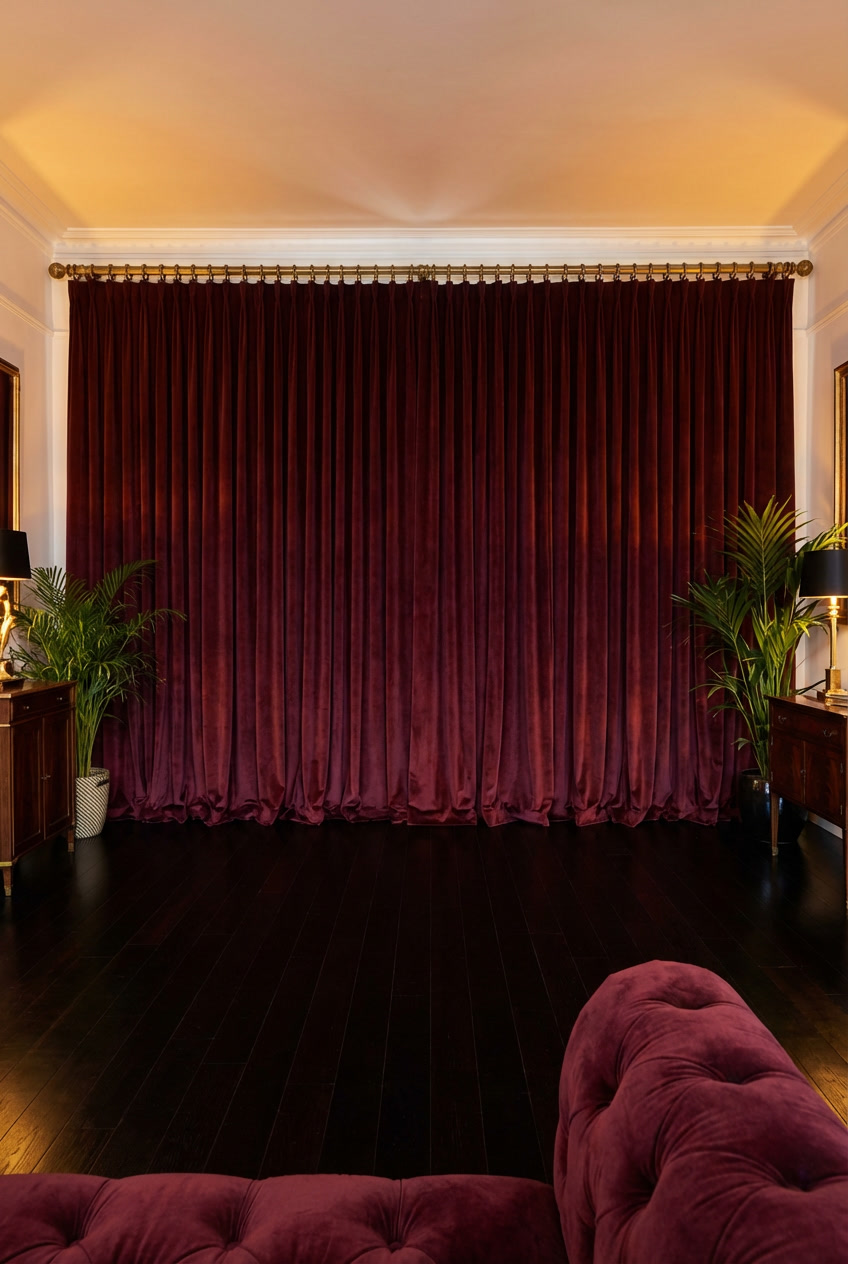
The curtains go up before anything is hung on the walls. They establish the room's vertical scale and determine every proportion decision that follows. Getting the drapery wrong — hanging panels at window-frame height, using fabric that doesn't pool — is the most common reason an Opera Aesthetic room stalls before it starts.
Drapery formula:
Rod mounted at ceiling height, or 4–6 inches below the ceiling. Never at window frame height.
Fabric falls to the floor and pools 1.5–2 inches. No floating hems.
Width: 2–2.5x the window measurement in total fabric — gathered, never flat.
Fabric weight: velvet or heavy lined linen only. Sheers belong in a different room.
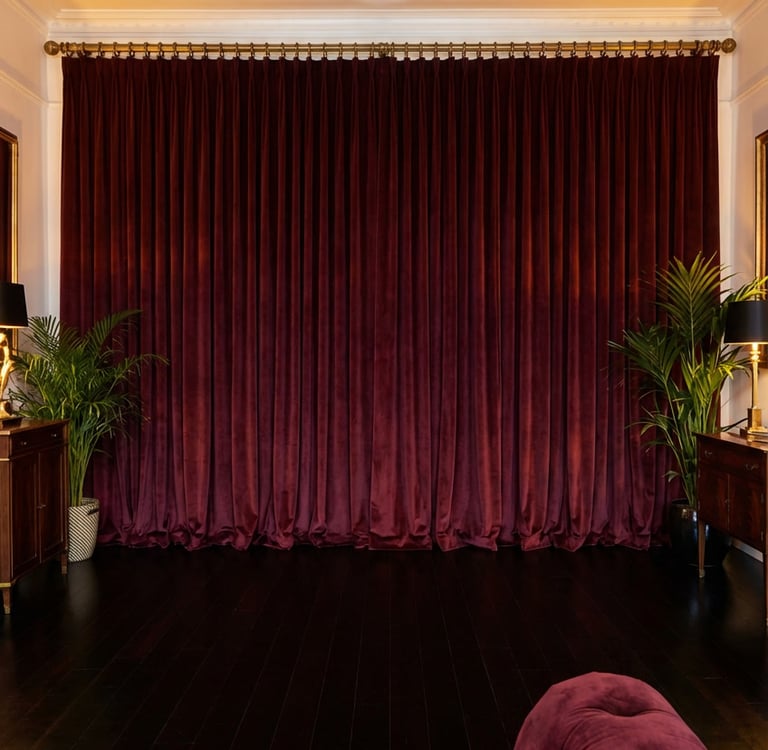
4. Floor-to-Ceiling Velvet Curtains in Burgundy, Set of 2 Panels
The single highest-impact change in an Opera Aesthetic room. A wall that reads blank becomes architectural the moment floor-length velvet hangs against it. Ceiling mount, floor pool. ~$60–180 per pair
5. Persian or Turkish-Style Area Rug in Burgundy and Gold
Placed under the front two legs of the sofa and all four legs of the coffee table or ottoman. Minimum 8×10 for a standard living room — smaller rugs float the furniture and break the grounded proportion the aesthetic requires. ~$80–300
Step 2: The Lighting Formula (Why Dark Rooms Look Depressing, Not Dramatic)
The most common Opera Aesthetic mistake is not a furniture choice. It is lighting a dark room with a single overhead source at full brightness. This flattens every surface, washes out the velvet pile, and makes burgundy walls read like a colour choice someone regrets.
The Opera Aesthetic uses three sources simultaneously, each at 30–40% intensity, all at 2700K warm white. No source is dominant. The room is lit the way a stage is lit in a quiet scene — warm, directional, and layered so that the shadow is as intentional as the light.
The three-source rule:
Source 1: ambient fill from a floor lamp or chandelier
Source 2: directional warmth from wall sconces flanking the mirror or fireplace
Source 3: candle-level glow from pillar candles or candelabra on the mantle and surfaces
6. Antique Brass Arc Floor Lamp
Positioned behind the accent chair, shade angled inward and slightly downward. Cream or linen shade only — white shades cast a cool light that cancels the 2700K warmth you are building. ~$80–200
7. Plug-In Brass Wall Sconce, Set of 2
Mounted at 66–68 inches from the floor, flanking the mirror or fireplace. Plug-in eliminates wiring; a cord cover handles the run to the outlet. Dimmable — these operate at 30–40%, not full brightness. ~$40–100 each
8. Antique Brass Candelabra or Pillar Candle Holders
Two on the mantle at uneven heights, one on the coffee table tray, one on the console. These are not decorative accents — they are the third light source. Real candles or battery-operated flame-effect pillars both work; the warmth of the flame colour matters more than whether it burns. ~$25–80
Step 3: The Accessory Sequence (Mantle → Coffee Table → Shelves)
Accessories are placed in order. Mantle first because it establishes the room's vertical focal point. Coffee table second because it anchors the seating arrangement. Shelves and consoles last because they fill the periphery, not the centre.
The Mantle
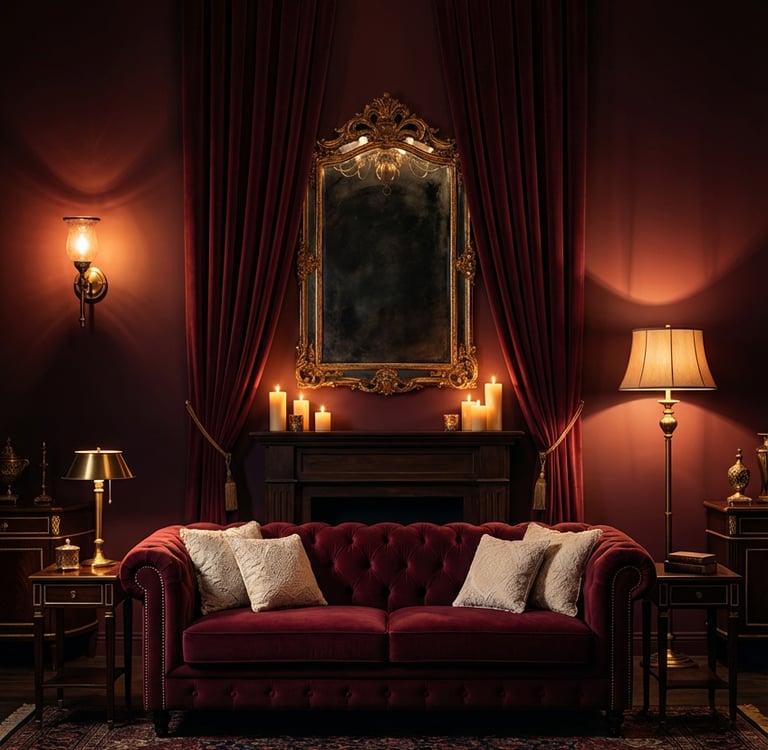
9. Ornate Gilt-Framed Mirror, Large Wall
Hung above the mantle and filling as much of the wall space between the mantle shelf and ceiling as possible. This is not accent decor — it is an architectural element. Minimum 30×40 inches. The frame should be carved gilt or aged gold; flat gold frames belong to a different register entirely. ~$80–250
Mantle styling rule: mirror centred, two pillar candles at uneven heights (taller at left), one sculptural object only. Three items. The restraint signals intention.
The Coffee Table
10. Decorative Brass Tray with Handles
The tray defines the styling zone on the coffee table and prevents the surface from reading as surface clutter. Inside the tray: two tapered candles at uneven heights, one dark-bound art book flat beneath, one small brass or bronze object. Four items. Nothing placed outside the tray. ~$30–80
11. Velvet Throw Pillows in Burgundy, Bone Lace, and Antique Gold
On the sofa: two burgundy pillows flanking one bone lace, or two antique gold flanking one burgundy. Three pillows per sofa section. Velvet fabric only — polyester pillow covers carry a sheen that reads synthetic against crushed velvet upholstery. ~$20–50 each
The Walls and Surfaces
12. Dark-Framed Classical Art Reproductions
One large print leaning against the wall on the mantle shelf, or a pair hung flanking the fireplace at identical heights. Subject: European portraiture, architectural engravings, or antique botanical illustration. Abstract prints belong in a different aesthetic — this room has a specific cultural reference point and the art should hold it. ~$30–100
13. Dark Carved Wood Console Table
Placed behind the sofa or against a secondary wall. Styled with three objects maximum: one tall brass candlestick, one stack of dark-spined books, one sculptural brass object. No more than three. The console is a surface, not a shelf. ~$100–300
14. Sculpted Brass or Bronze Decorative Objects
One per surface zone. These carry the gold thread through the room and catch the 2700K warmth in a way that ceramic and glass do not. Look for figurines, abstract sculptural forms, or architectural fragment reproductions in aged brass or verdigris bronze — not polished chrome, not satin gold. ~$25–80 each
15. Dark Bookshelf or Display Cabinet
High-impact where the room has the wall space. Style with the 50-30-20 rule: 50% books in dark spine colours, 30% brass and bronze objects, 20% deliberate empty space. The empty space is not empty — it is where the ambient light pools and makes the shelf read as composed rather than filled. ~$150–400
The Budget Build: $300 / $700 / $1500+
$300 entry — textiles first:
Begin with the velvet curtains (4), the Persian rug (5), the velvet throw pillows (11), and the brass candelabra (8). These four changes establish the palette and the correct sense of scale before any furniture investment. The room reads Opera Aesthetic immediately.
$700 mid tier — add the light and the focal point:
Add the arc floor lamp (6), the plug-in sconces (7), the gilt mirror (9), and the brass coffee table tray (10). The room now has a correctly layered lighting system and a resolved focal point above the mantle. At this tier it photographs like the full build.
$1500+ full build — the furniture:
Invest in the Chesterfield sofa (1), the accent chair (2), the velvet ottoman (3), and the console table (13). At this tier every element is in place. The formula resolves and nothing is missing.
Renter Version: The Full Opera Aesthetic Without Permanent Changes
Every step above is achievable without touching a wall:
Curtains: ceiling-mounted tension rod — no drilling, no landlord conversation
Sconces: plug-in with a cord cover — no electrician
Mirror: lean against the wall on the mantle or on a picture ledge shelf — no hanging hardware
Color: the velvet curtains, Persian rug, and sofa do the palette work without a drop of paint
The renter version is not a compromise. At $400–600 in textiles and lighting, the room reads fully resolved. The sofa can wait until the next address.
The Opera Aesthetic is not about expensive things. It is about the right things, in the right order, lit correctly. A room that follows this formula reads theatrical at $700. A room that ignores it reads heavy at $3000.
Anchor first. Drape before the art. Fix the lighting before the objects arrive. Everything else follows from those three decisions.
You Might Also Love
Plum Noir Living Room — the Opera Aesthetic's quieter sibling: near-black and deep plum in place of burgundy and gold, intimate drama in place of theatrical grandeur. The palette overlaps; the mood does not.
Dark Academia Living Room — dark wood, leather, and amber lamplight for a living room that reads intellectually moody rather than operatically staged.
Gothic Bedroom Decor — take the dark luxury approach into the bedroom with arched forms, iron hardware, and deep jewel tones that carry the Opera palette into the rest of the home.
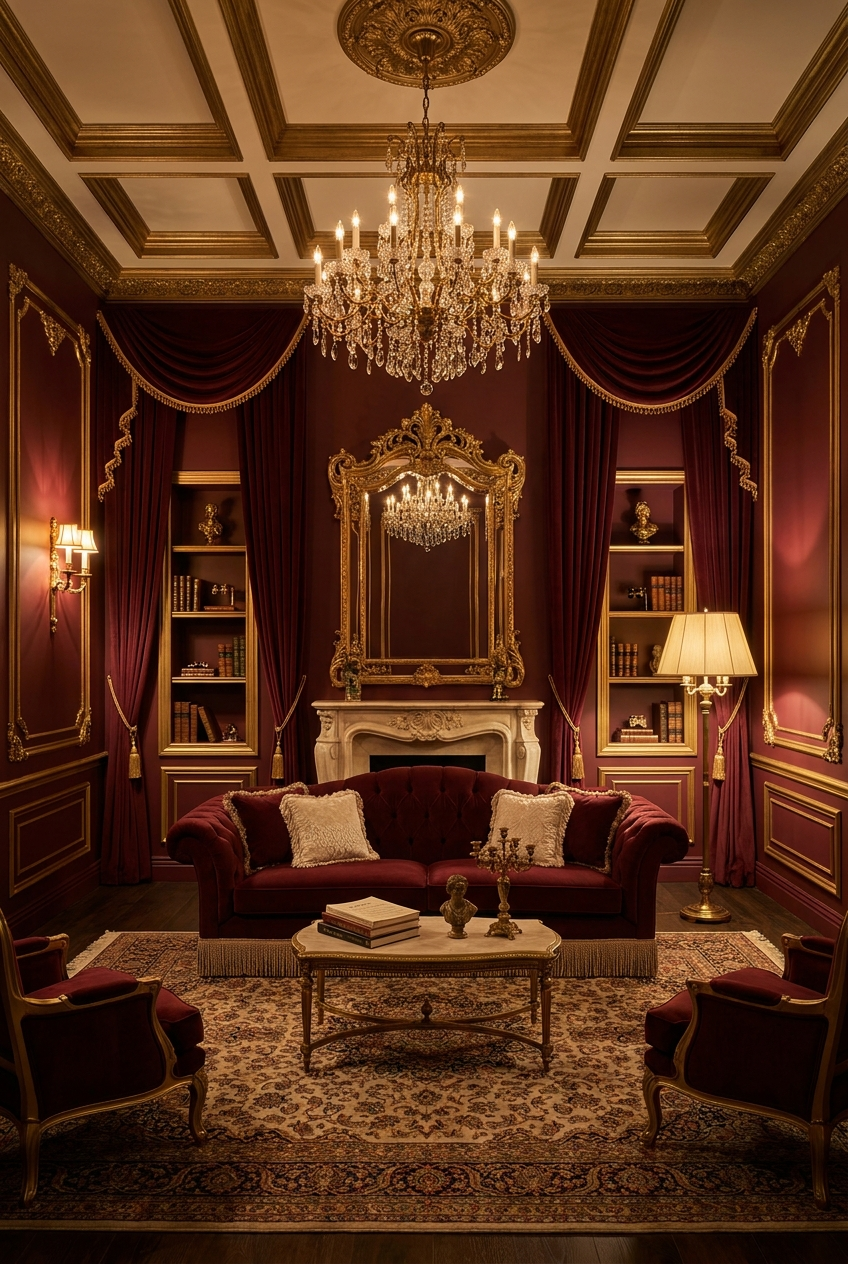
Stay
Follow @moodyhomeco on Pinterest for daily moody home inspiration →
[Pinterest icon linked to your profile]
Contact
Subscribe
© 2025. All rights reserved.